As writer Chimamanda Ngozi Adichie notes, there is always “the danger of a single story.” Every story has multiple layers, especially one that is driven by numbers. Once we discover the nuanced layers of a troubling story — that’s when we can start to create solutions.
Gender-based analysis and intersectionality can help us discover the nuanced layers behind the story of Toronto’s working poor. Theorized by legal scholar Kimberlé Crenshaw, intersectionality asserts that each of us has multiple identities. And how those identities and social locations intersect impacts our lives.
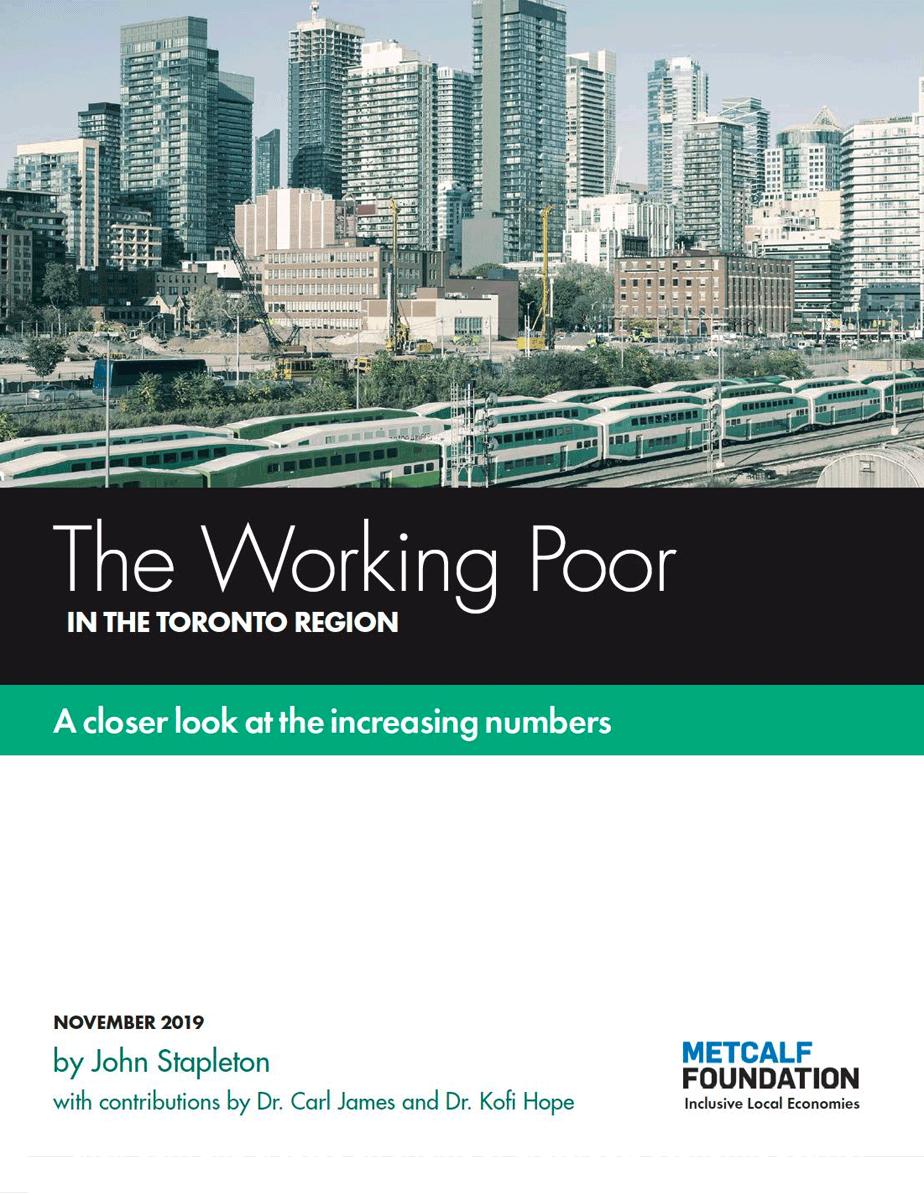
As the Metcalf report notes, employment outcomes of racialized women are worse than they are for White men. Through our work at YWCA Canada we see how anti-Black racism, anti-Indigenous racism, xenophobia and sexism, hold women back from obtaining employment and advancing in their careers.
As a South Asian woman with over 20 years’ experience in the feminist movement, I regularly see how these dynamics play out. A woman describes landlords who demand sexual favours from tenants in exchange for substandard housing. Another woman recounts how employers take advantage of her immigration status and refuse to pay her minimum wage. One woman from a remote community told me she had to take three different buses to her job; one day she was fired after missing work due to a snowstorm.
These are not isolated situations. The reality is that people doubt the serious challenges women face accessing housing and employment. Many people question if there are any issues at all. Homelessness is often hidden. For women, homelessness may look like couch surfing or staying at shelters. This rarely shows up in official statistics. One way of addressing these challenges is to create policy frameworks that put historically disadvantaged groups — women and racialized people — right at their centre.
That’s why YWCA Canada and its Member Associations advocated for at least 25% of investments in the National Housing Strategy — a $40 billion commitment over the next 10 years to strengthen housing supply — be focused specifically through a gender lens.
We also need to apply a gendered lens then we think of policy prescriptions to address the rising rate of working poverty. Take employment insurance, for example. It is an important component of Canada’s social safety net that provides temporary income support for unemployed workers while they search for work or re-skill. The world of work is shifting rapidly and unfortunately the employment insurance program has not kept up. Women, especially Indigenous, racialized, and newcomer women, are over-represented in short-term, contract, and seasonal work. People in these types of precarious jobs often face challenges accessing EI because they haven’t worked enough hours to meet the eligibility criteria. That’s why we are calling for a national universal eligibility threshold of 360 hours.
I have the distinct privilege of working with Black feminists at YWCAs across the country. These colleagues are on the front lines in the battle for the working poor and equity in Canada. They have taught me that it is important to distinguish anti-Black racism to get at the root causes of issues.
I recently met with a Black mothers’ group who spoke to me about the impact of racial profiling by child protection services. The disturbing practice of policing of Black mothers in their own homes speaks to how structural anti-Black racism dehumanizes Black women and their families.
Stapleton’s report notes that working poverty among Black Canadian-born females “rose from 9.7% in 2006 to 12.2% in 2016.” The numbers do not tell the full story. A deeper dive is required. It is important to ask “why?” We know that Black women are disproportionately profiled by retailers, private businesses, police and transportation sectors. If Black women are experiencing daily profiling, how does that bias play a role in hiring discrimination? Moreover, Black mothers are disproportionately investigated by child protection services. How can a mother escape poverty if she is constantly fighting battles with child protection?
Educational research documents that schools dissuade black students from going to university — something I have witnessed firsthand as a former youth worker. If an education system actively demeans Black students, how does this limit their access to well-paying jobs in growing occupations?
Drs. Hope and James remind us of the principle of ‘do less harm’ and the consequences of the misinterpretation of data (page 36). Ultimately to solve working poverty, we must take an intersectional approach that puts diverse women and equity-seeking communities at the centre. Then and only then can we can find policy solutions that put the needs of marginalized communities first and ensure no one is left behind.
Maya Roy is the CEO of YWCA Canada, the oldest women’s organization in the country. In 2020, YWCA Canada will be celebrating its 150th year anniversary. YWCA Canada is the nation’s largest provider of housing and shelter services for women and girls. Maya Roy holds a MSc in Social Policy and Planning from the London School of Economics and Political Science. In 2019, she was named Canada’s Top 40 Under 40 and one of the World Economic Forum’s Young Global Leaders.
References
Crenshaw, K. (1991). Mapping the Margins: Intersectionality, Identity Politics, and Violence Against Women of Color. Stanford Law Review, 43(6), 1241-1299. Retrieved from: https://www.jstor.org/stable/1229039?seq=1
Poon, O.Y., Squire, D., Kodama, C., Byrd, A., Chan, J., Manzano, L., Furr, S., & Bishundat, D. (2015). A Critical Review of the Model Minority Myth in Selected Literature on Asian Americans and Pacific Islanders in Higher Education. Review of Educational Research, 20(10), 1-34. Retrieved from: convention.myacpa.org