Metcalf Fellowship

Providing critical thinkers with opportunities to address complex ecological, social, economic, and cultural issues

Metcalf Fellowship

Providing critical thinkers with opportunities to address complex ecological, social, economic, and cultural issues

The Metcalf Fellowship program provides critical thinkers with the opportunity to tackle hard questions and propose solutions to systemic issues in areas which we work, namely Environment, Inclusive Local Economies, and Performing Arts. The Fellowship provides an opportunity for sustained thinking and writing in pursuit of pragmatic ideas, models, and practices.

By supporting and disseminating new work and connecting innovative practice to the broader enabling environment, we advance policy priorities  and strengthen our granting programs. Established in 2005, the Metcalf Foundation has supported the work of 19 fellows to date and released 30 reports.

The Metcalf Fellowship provided me with a once in a lifetime opportunity to step back from my work and put some of what I’ve learnt over the past 25 years of social and environmental activism onto paper.

Graham Saul
Executive Director, Nature Canada and Metcalf Fellow (2017-2018)
The Agenda with Steve Paikin, November 7, 2018. 25 min.

There are only very rare opportunities to do this kind of work… There are very few organizations that are willing to support and trust in critical, systemic thinking. And yet, in my view, non-partisan innovative thinking and collaboration that pushes public discourse, encourages civic engagement, and promotes practical problem solving is very sorely needed, particularly at this point in our history.

Fay Faraday
Lawyer, Professor, and Metcalf Fellow (2011-2017)
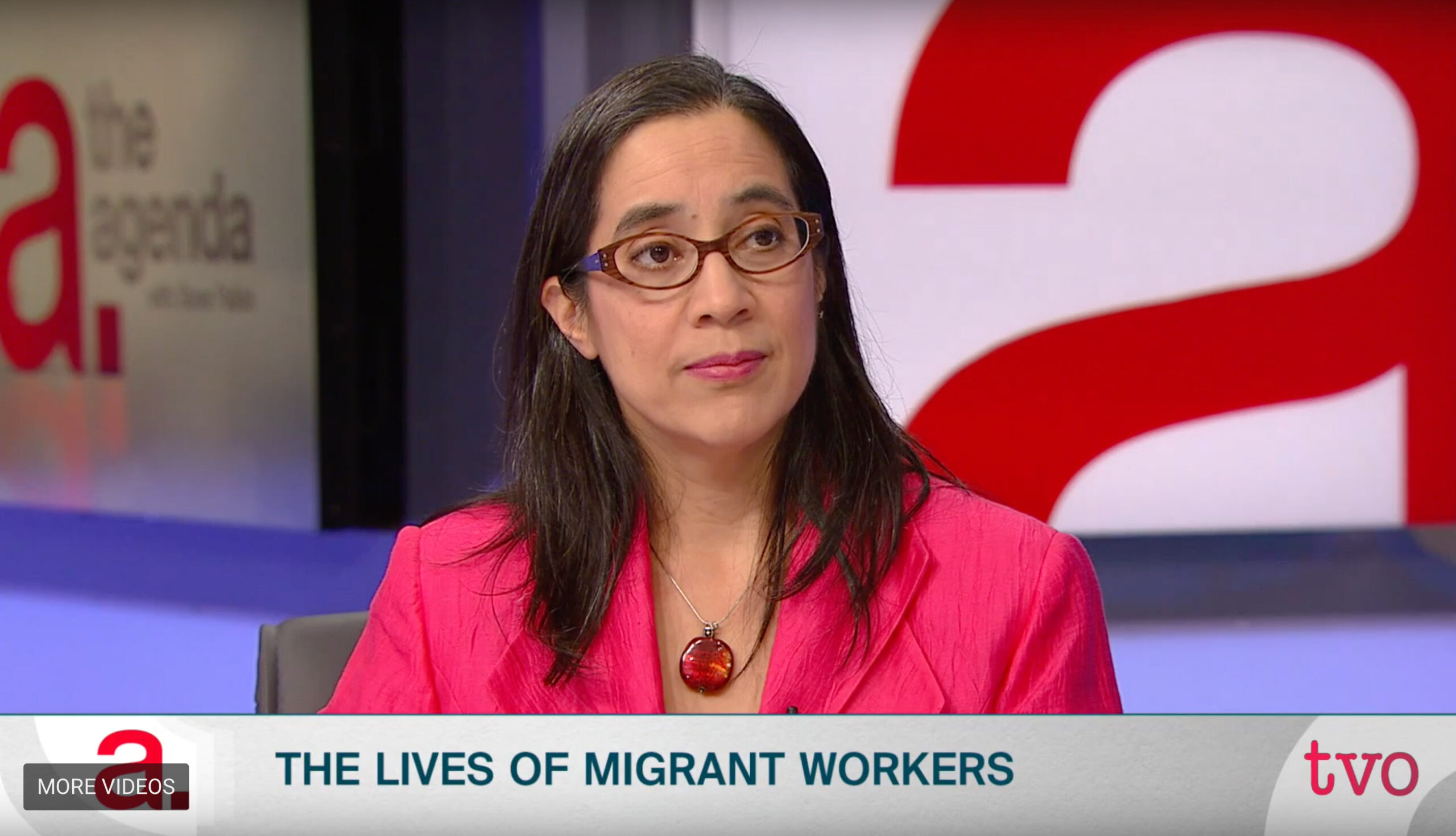
Fay Faraday appears on a panel with Min Sook Lee and Jenn Pfenning, The Agenda with Steve Paikin, TVO, September 14, 2016. 28 min.

Featured Publications

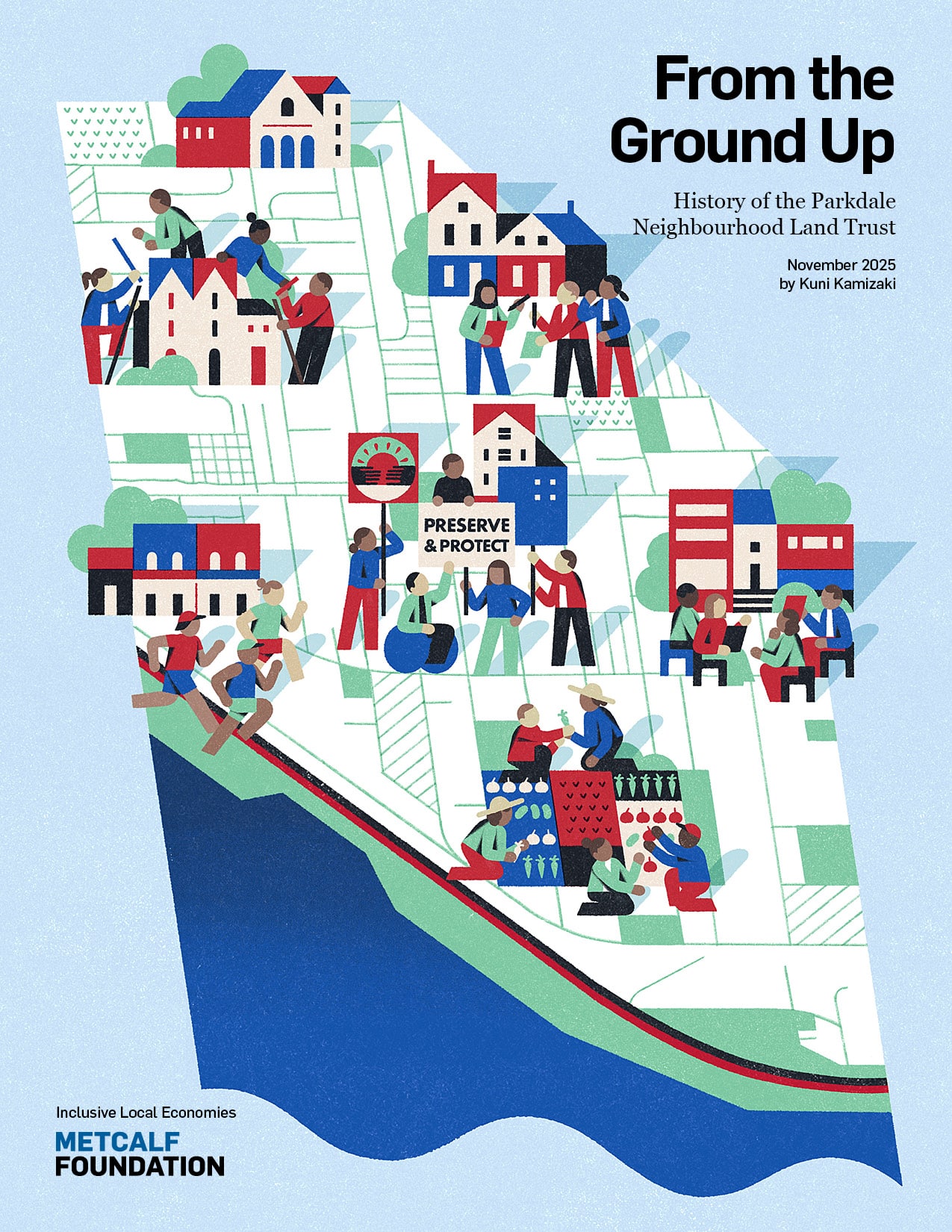
Metcalf Fellow Kuni Kamizaki’s two-part report draws on more than a decade of his involvement with the Parkdale Neighbourhood Land Trust to tell the story of its origins and evolution, and to explore the broader transformative potential of the community land trust model.

Driven by a sense of urgency and optimism, Art and the World After This makes the case for grounding the arts firmly in action as a powerful force for creating a better world. The report explores four distinct but interrelated disruptions which have shaken our world — the disruption of activity (pandemic), society (social unrest), industry (digital revolution), and the world (climate crisis) — as well as the unique value art brings to society. In this timely report, David Maggs explores how the arts can serve a more applied and accountable role in society as a catalyst for meeting the profound challenges we face.
Danielle Olsen and John MacLaughlin seek to deepen our understanding of how to connect job seekers to good jobs by illuminating the work of innovators – NPower Canada, Building Up, Elevate Plus Manufacturing, and ACCES Employment – who are leading the way in demonstrating how workforce solutions can be poverty reduction strategies.
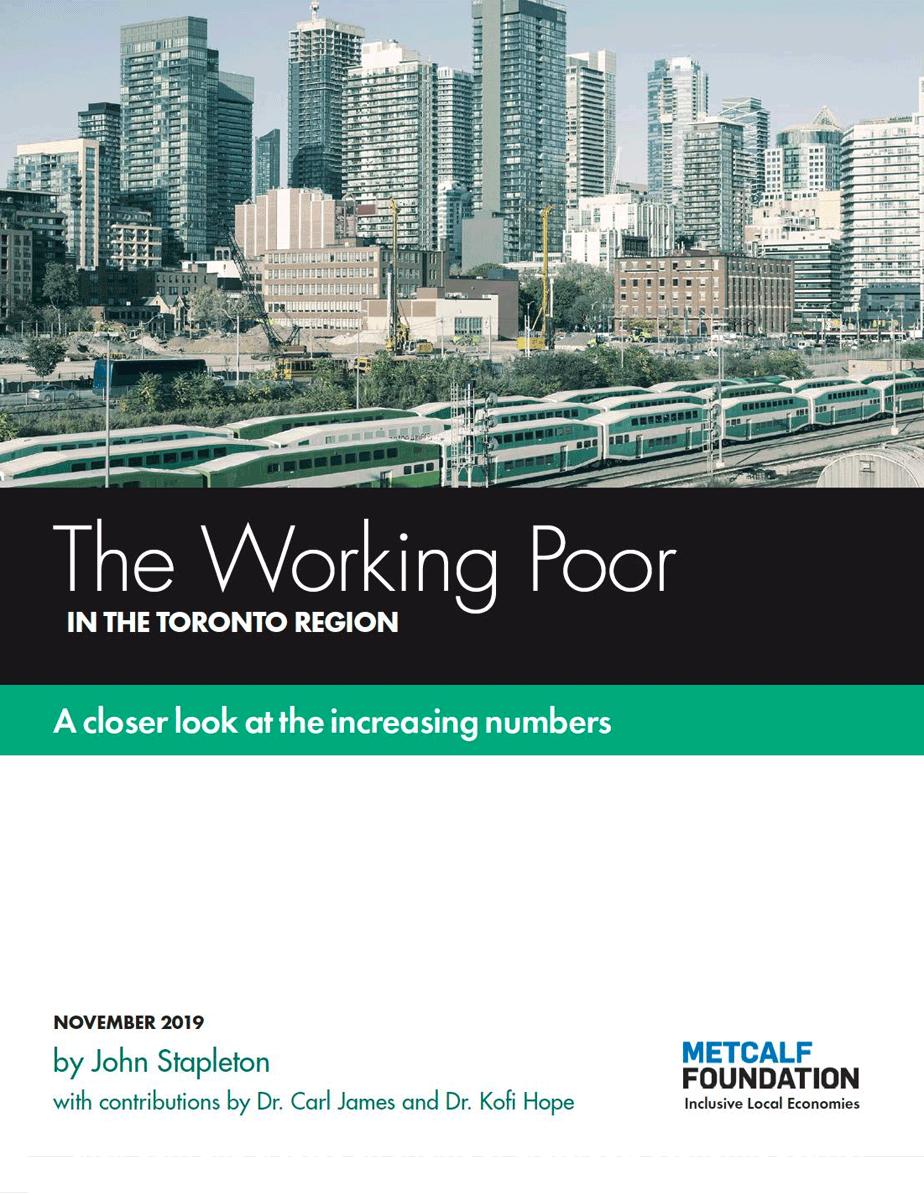
Written by Metcalf Fellow John Stapleton, with contributions by Dr. Carl James and Dr. Kofi Hope, The Working Poor in the Toronto Region is Metcalf’s third in a series aimed at illuminating the realities of working poverty in our region and providing an overview of the factors driving the continued rise in numbers. Drawing on census data from 2016, and by disaggregating the data, Stapleton identifies that in Toronto CMA, 46% of the working-age population is racialized, yet 63% of the working poor are racialized. Some of the highest rates of working poverty are among Toronto’s Black communities. Dr. James and Dr. Hope provide contextual framing for how this data might be interpreted.
In 2017, anti-poverty activist Bee Lee Soh and John Stapleton were selected to participate on the federal government’s Ministerial Advisory Committee on Poverty. Despite the best of intentions to create an inclusive process, Soh faced many challenges to participation. In Voice of Experience: Engaging People with Lived Experience of Poverty in Consultations, Stapleton and Soh identify barriers and impediments to participation, and suggest ways in which government entities can address these barriers to ensure successful inclusion of people with lived experience of poverty in policy consultations.
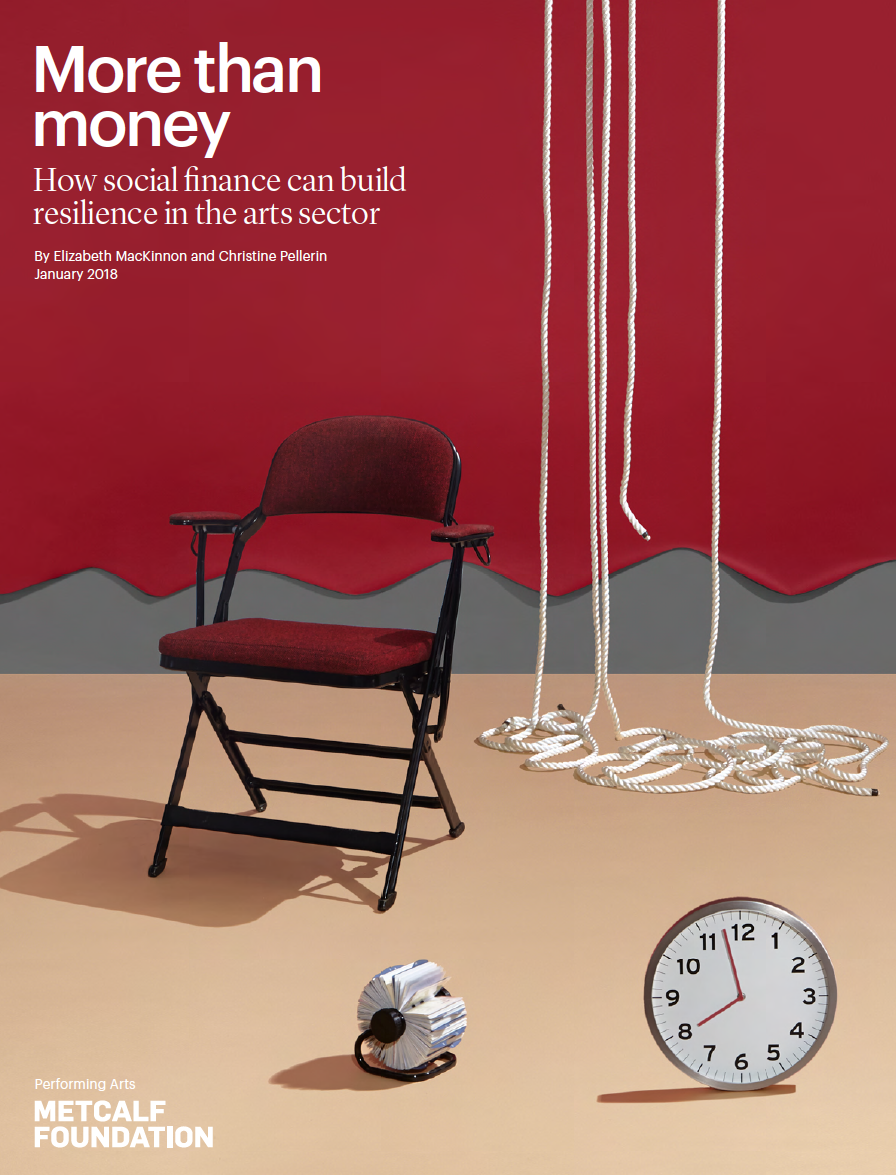
With the traditional reliance upon grants and earned revenue under strain, the possibility of unlocking new pools of funds is both compelling and enticing. This report breaks new ground in exploring how the non-profit arts sector in Canada could harness the power of social finance to strengthen its financial footing by surveying national and international examples.

Metcalf Fellows

Filter by Program Subjects