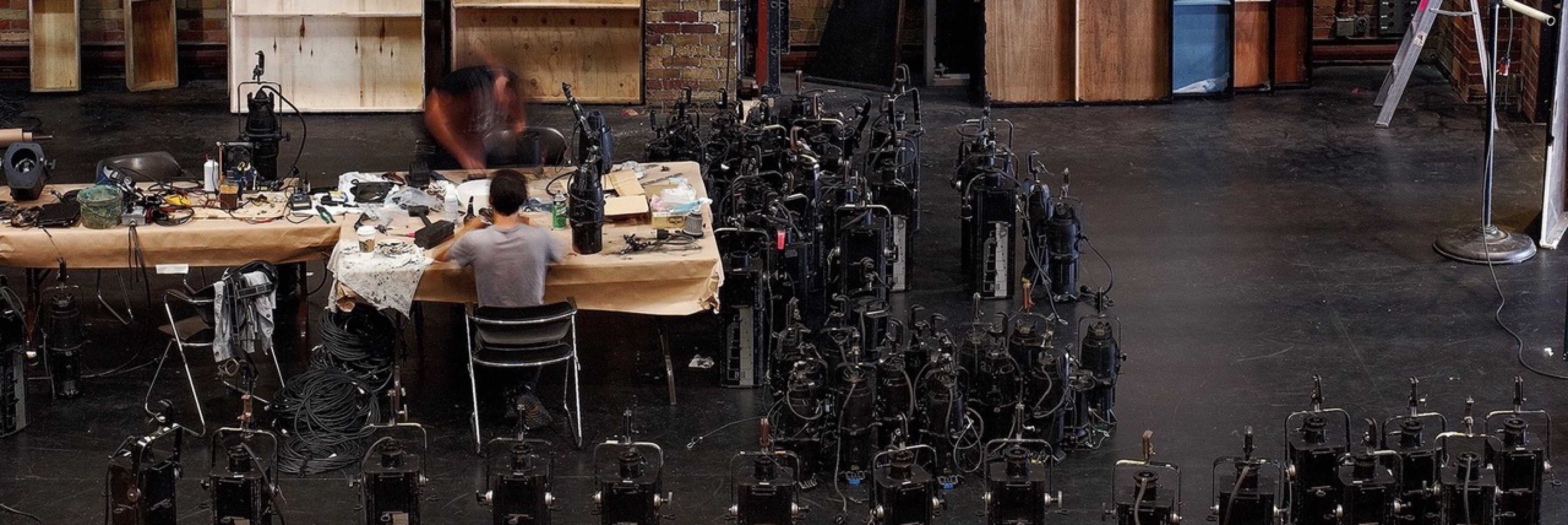
The performing arts are collaborative and labour intensive. It takes a myriad of highly trained people — artists, producers, administrators, craftspeople, technicians, and facility staff — to make a professional performance possible.
The Metcalf Foundation aims to strengthen the performing arts by supporting paid internships. The internships are designed to encourage the sharing of the rich experience and specialized knowledge that exists throughout the sector. Individuals who complete internships should have more knowledge, better skills, broader work experience, and more robust networks — all of which will help them gain meaningful and sustainable employment while making a strong professional contribution to the performing arts. The initiative also encourages arts companies to reaffirm their commitment to the future by providing formal opportunities for mentoring and training.
Internship grants are for an intern’s salary and statutory benefits, to a maximum of $40,000 for a full-time, 10-month long internship.
The people in performing arts organizations, whether onstage or off, are its most crucial resource. They are creative, committed individuals striving to create and to produce in a complex, challenging environment.
The Metcalf Foundation aims to strengthen the performing arts by supporting paid internships in artistic, administrative, and production roles including producers, administrators, choreographers, composers, conductors, curators, designers, directors, and playwrights. Other roles that are integral to the sector will also be considered (performers are excluded).
Internship grants are for an intern’s salary and statutory benefits, to a maximum of $40,000 for a full-time, 10-month long internship. Organizations may contribute more to the salary if they wish.
Organizations applying to this program must:
For 2026, application deadlines are:
Round 1: March 31, 2:00pm ET
Round 2: October 6, 2:00pm ET
Does Metcalf make grants in other arts disciplines, like visual or media arts, writing, or museums?
No. Metcalf’s Performing Arts program grants are limited to organizations in the live performing arts, defined as theatre, dance, music, and opera companies or those working between and among these disciplines (including creation/production companies, festivals, and professional training institutions). We will also consider requests from arts service organizations serving the live performing arts, but, except in rare circumstances, it will not consider cross-disciplinary service organizations that serve a variety of art forms including the performing arts.
My organization is not a registered charity, but we are incorporated as a not-for-profit. Can we still make an application to Metcalf?
No. Currently the Performing Arts program is only funding organizations that have a valid charitable registration number from the Canada Revenue Agency.
Will Metcalf make Performing Arts Internships grants to organizations outside of Ontario?
No. Applicants to the Performing Arts Internships initiative must be based in Ontario, and the proposed internship activity must take place in Ontario.
Does the proposed intern need to be based in Ontario? Based in Canada?
The proposed intern must be legally able to work in Canada.
Beyond that criterion, Metcalf is hoping to use the Performing Arts Internships initiative to strengthen the arts sector in the geographic area where we work. While there is no absolute criterion that the intern must be committed to a career in Ontario, it could be a consideration when assessing internship applications from a highly competitive pool of applicants.
I have just completed my post-secondary training in the arts. Can I make an individual application to become an intern?
Metcalf only provides grants to organizations with a current charitable registration number from the Canada Revenue Agency. For that reason, applications must be submitted by the company where the internship will be undertaken.
The needs of the intern, however, are the leading criterion for assessing applications. For that reason, the strongest submissions have often been initiated by the prospective intern, who seeks out the most appropriate mentoring organization, works with that company to develop a strong work plan that corresponds to their own learning goals, and participates in the submission of the application.
How can I find a mentor and/or hosting organization who could apply for an internship for me?
Metcalf does not arrange mentorships for interns. Often, interns seek these relationships from organizations or mentors with whom they already have some connection through volunteer work, co-op work placements, or performance experience. In the absence of any relationship of this type, prospective interns have sought out individuals and companies whose work they find inspiring and investigated that company’s willingness to apply for funding for an internship position.
Can an organization apply for grants from the Booster Fund, the Strategic Experimentation Fund, and the Performing Arts Internships initiatives at the same time?
Yes. These applications would be treated separately, and each would be assessed on its individual merits. We would need to consider, however, the applicant’s capacity to undertake all of the proposed activities.
Can an organization request more than one internship in any round of applications?
Metcalf does not limit the number of internships for which an organization can apply in a given round; each application is assessed on its individual merits. When applications are being assessed, however, we do consider an organization’s capacity to provide strong mentorships. While a larger organization might have the capacity to provide a number of strong internships simultaneously in different departments, smaller companies might have less ability to do so. For this reason, the submission of multiple proposals could weaken all of the applications.
How often can an organization apply for internship funding?
There is no limit to the number of times an organization can apply for internship funding. Applicants should remain conscious, however, that this program was created to fund learning opportunities for interns and not to create positions at organizations. Repeated applications to fund an internship that appears to be an ongoing position, therefore, are less likely to be successful; the emphasis of the application needs to remain on the specific professional development goals of each individual intern.
Why does Metcalf recommend that we talk to program staff in advance of making an application?
Metcalf’s funding programs are highly competitive, and we receive many more applications than we can fund. For the Internship initiative, we have provided a suite of resources on our website to help applicants make the best case for support including detailed guidelines, a webinar, video pointers, and an FAQ. Prospective mentors and interns are expected to review all the resources as they design their internship opportunity. If clarifying questions remain after reviewing all the resources, applicants can reach out to the Performing Arts Program Director to set up a time to address them. This meeting is not a pre-assessment of the potential of the compelling match between intern and mentor but intended to resolve outstanding application questions. Applicants, however, are not required to meet with the Program Director prior to making a submission.
Would Metcalf staff be willing to review my proposal in advance of the deadline?
Due to the large number of applicants and our inability to provide the same amount of feedback to everyone, we cannot read drafts prior to submissions.
The Metcalf Foundation launched the Performing Arts Internships in 2001 in the wake of a renewal of the Performing Arts program.
The focus for the new Performing Arts program emerged in response to particular issues identified in that process and was based on certain assumptions about the environment for the arts at that time. The performing arts are collaborative and labour-intensive. It takes a myriad of highly trained people — artists, producers, administrators, craftspeople, technicians, and facility staff — to make a professional performance possible. The people in a performing arts organization, whether onstage or off, are its most crucial resource.
Historically, paid assistant and apprentice positions had been an effective way for the sector to nurture and develop its human resources. However, many years of cuts to operating budgets in the 1990s, combined with profound political, economic, and social changes, had meant that funding for many of these positions had virtually disappeared. This severely limited access to training, mentoring, and meaningful work experience.
Without this experience I would not have the career that I have now. The relationships I made over that year have been instrumental in all of my work, and my career moved forward much faster than it would have otherwise.

To get a year was so fantastic. It’s hard to know how I would have moved forward without it.
In light of this, Metcalf decided to support training and professional development for creative artists, administrators, and production staff. This was an excellent intersection of the Foundation’s interests, a real need in the performing arts, and the possibility of broad positive impact.
From the program’s inception, the community responded positively. The first meeting of interns was convened in 2002. They talked about themselves, their work in the arts, and what an internship meant to them. They made suggestions to strengthen the program. They described their hopes for the future and networked with one another.

Schools can’t teach everything. The nurturing that good mentoring can do is worth years of school training. Nothing replaces it, or ever has.
Over the years, many interns have gone on to become mentors themselves. The program has always depended upon a strong relationship between the mentor and intern. Metcalf places significant importance on hearing the individual voice, perspective, and passion of both the intern and mentor. It is important that the resources and capacity of the host organization respond appropriately to the goals of the intern.

Sitting on the advisory committee is inspiring in many ways. There is so much going on in the performing arts, reading the applications really helps you to see what people are trying to do.
The role of outside advisors has also been critical to the success of the program. Experienced and knowledgeable advisors bring great insight to the task of assessing individual applications. Their opinions, both on specific submissions and broader policy issues, are highly valued. They are an advisory panel, and not a jury with decision-making powers. The Foundation does not require consensus from them, but rather a vigorous airing of the merits of the applications.

Mentoring is a tangible commitment to the future—not an abstract notion. It’s great to know that you are developing leadership and nurturing the broader field.
The sector has used the program to address gaps in skills training. Internships are a way to introduce a younger and more diverse workforce into the sector. Interns are given an invaluable introduction to existing knowledge, experience, and networks that they can use right away to move forward in their careers.

The performing arts are collaborative and labour intensive. It takes a myriad of highly trained people — artists, producers, administrators, craftspeople, technicians, and facility staff — to make a professional performance possible.
The Metcalf Foundation aims to strengthen the performing arts by supporting paid internships. The internships are designed to encourage the sharing of the rich experience and specialized knowledge that exists throughout the sector. Individuals who complete internships should have more knowledge, better skills, broader work experience, and more robust networks — all of which will help them gain meaningful and sustainable employment while making a strong professional contribution to the performing arts. The initiative also encourages arts companies to reaffirm their commitment to the future by providing formal opportunities for mentoring and training.
Internship grants are for an intern’s salary and statutory benefits, to a maximum of $40,000 for a full-time, 10-month long internship.
The people in performing arts organizations, whether onstage or off, are its most crucial resource. They are creative, committed individuals striving to create and to produce in a complex, challenging environment.
The Metcalf Foundation aims to strengthen the performing arts by supporting paid internships in artistic, administrative, and production roles including producers, administrators, choreographers, composers, conductors, curators, designers, directors, and playwrights. Other roles that are integral to the sector will also be considered (performers are excluded).
Internship grants are for an intern’s salary and statutory benefits, to a maximum of $40,000 for a full-time, 10-month long internship. Organizations may contribute more to the salary if they wish.
Organizations applying to this program must:
For 2026, application deadlines are:
Round 1: March 31, 2:00pm ET
Round 2: October 6, 2:00pm ET
Does Metcalf make grants in other arts disciplines, like visual or media arts, writing, or museums?
No. Metcalf’s Performing Arts program grants are limited to organizations in the live performing arts, defined as theatre, dance, music, and opera companies or those working between and among these disciplines (including creation/production companies, festivals, and professional training institutions). We will also consider requests from arts service organizations serving the live performing arts, but, except in rare circumstances, it will not consider cross-disciplinary service organizations that serve a variety of art forms including the performing arts.
My organization is not a registered charity, but we are incorporated as a not-for-profit. Can we still make an application to Metcalf?
No. Currently the Performing Arts program is only funding organizations that have a valid charitable registration number from the Canada Revenue Agency.
Will Metcalf make Performing Arts Internships grants to organizations outside of Ontario?
No. Applicants to the Performing Arts Internships initiative must be based in Ontario, and the proposed internship activity must take place in Ontario.
Does the proposed intern need to be based in Ontario? Based in Canada?
The proposed intern must be legally able to work in Canada.
Beyond that criterion, Metcalf is hoping to use the Performing Arts Internships initiative to strengthen the arts sector in the geographic area where we work. While there is no absolute criterion that the intern must be committed to a career in Ontario, it could be a consideration when assessing internship applications from a highly competitive pool of applicants.
I have just completed my post-secondary training in the arts. Can I make an individual application to become an intern?
Metcalf only provides grants to organizations with a current charitable registration number from the Canada Revenue Agency. For that reason, applications must be submitted by the company where the internship will be undertaken.
The needs of the intern, however, are the leading criterion for assessing applications. For that reason, the strongest submissions have often been initiated by the prospective intern, who seeks out the most appropriate mentoring organization, works with that company to develop a strong work plan that corresponds to their own learning goals, and participates in the submission of the application.
How can I find a mentor and/or hosting organization who could apply for an internship for me?
Metcalf does not arrange mentorships for interns. Often, interns seek these relationships from organizations or mentors with whom they already have some connection through volunteer work, co-op work placements, or performance experience. In the absence of any relationship of this type, prospective interns have sought out individuals and companies whose work they find inspiring and investigated that company’s willingness to apply for funding for an internship position.
Can an organization apply for grants from the Booster Fund, the Strategic Experimentation Fund, and the Performing Arts Internships initiatives at the same time?
Yes. These applications would be treated separately, and each would be assessed on its individual merits. We would need to consider, however, the applicant’s capacity to undertake all of the proposed activities.
Can an organization request more than one internship in any round of applications?
Metcalf does not limit the number of internships for which an organization can apply in a given round; each application is assessed on its individual merits. When applications are being assessed, however, we do consider an organization’s capacity to provide strong mentorships. While a larger organization might have the capacity to provide a number of strong internships simultaneously in different departments, smaller companies might have less ability to do so. For this reason, the submission of multiple proposals could weaken all of the applications.
How often can an organization apply for internship funding?
There is no limit to the number of times an organization can apply for internship funding. Applicants should remain conscious, however, that this program was created to fund learning opportunities for interns and not to create positions at organizations. Repeated applications to fund an internship that appears to be an ongoing position, therefore, are less likely to be successful; the emphasis of the application needs to remain on the specific professional development goals of each individual intern.
Why does Metcalf recommend that we talk to program staff in advance of making an application?
Metcalf’s funding programs are highly competitive, and we receive many more applications than we can fund. For the Internship initiative, we have provided a suite of resources on our website to help applicants make the best case for support including detailed guidelines, a webinar, video pointers, and an FAQ. Prospective mentors and interns are expected to review all the resources as they design their internship opportunity. If clarifying questions remain after reviewing all the resources, applicants can reach out to the Performing Arts Program Director to set up a time to address them. This meeting is not a pre-assessment of the potential of the compelling match between intern and mentor but intended to resolve outstanding application questions. Applicants, however, are not required to meet with the Program Director prior to making a submission.
Would Metcalf staff be willing to review my proposal in advance of the deadline?
Due to the large number of applicants and our inability to provide the same amount of feedback to everyone, we cannot read drafts prior to submissions.
The Metcalf Foundation launched the Performing Arts Internships in 2001 in the wake of a renewal of the Performing Arts program.
The focus for the new Performing Arts program emerged in response to particular issues identified in that process and was based on certain assumptions about the environment for the arts at that time. The performing arts are collaborative and labour-intensive. It takes a myriad of highly trained people — artists, producers, administrators, craftspeople, technicians, and facility staff — to make a professional performance possible. The people in a performing arts organization, whether onstage or off, are its most crucial resource.
Historically, paid assistant and apprentice positions had been an effective way for the sector to nurture and develop its human resources. However, many years of cuts to operating budgets in the 1990s, combined with profound political, economic, and social changes, had meant that funding for many of these positions had virtually disappeared. This severely limited access to training, mentoring, and meaningful work experience.
Without this experience I would not have the career that I have now. The relationships I made over that year have been instrumental in all of my work, and my career moved forward much faster than it would have otherwise.
To get a year was so fantastic. It’s hard to know how I would have moved forward without it.
In light of this, Metcalf decided to support training and professional development for creative artists, administrators, and production staff. This was an excellent intersection of the Foundation’s interests, a real need in the performing arts, and the possibility of broad positive impact.
From the program’s inception, the community responded positively. The first meeting of interns was convened in 2002. They talked about themselves, their work in the arts, and what an internship meant to them. They made suggestions to strengthen the program. They described their hopes for the future and networked with one another.
Schools can’t teach everything. The nurturing that good mentoring can do is worth years of school training. Nothing replaces it, or ever has.
Over the years, many interns have gone on to become mentors themselves. The program has always depended upon a strong relationship between the mentor and intern. Metcalf places significant importance on hearing the individual voice, perspective, and passion of both the intern and mentor. It is important that the resources and capacity of the host organization respond appropriately to the goals of the intern.
Sitting on the advisory committee is inspiring in many ways. There is so much going on in the performing arts, reading the applications really helps you to see what people are trying to do.
The role of outside advisors has also been critical to the success of the program. Experienced and knowledgeable advisors bring great insight to the task of assessing individual applications. Their opinions, both on specific submissions and broader policy issues, are highly valued. They are an advisory panel, and not a jury with decision-making powers. The Foundation does not require consensus from them, but rather a vigorous airing of the merits of the applications.
Mentoring is a tangible commitment to the future—not an abstract notion. It’s great to know that you are developing leadership and nurturing the broader field.
The sector has used the program to address gaps in skills training. Internships are a way to introduce a younger and more diverse workforce into the sector. Interns are given an invaluable introduction to existing knowledge, experience, and networks that they can use right away to move forward in their careers.
Metcalf Internships 2001–2026
By Position
Metcalf Internships 2001–2026
By Discipline
That internship was a turning point in my life, and THE turning point in my career.



Alexa Belgrave is a Toronto-based music director, pianist, and educator. Her work spans various genres and mediums, rooted in both jazz and classical traditions. Though very different, these genres are the baseline to her approach in understanding the role of play and structure in her teaching and practice as an artist.
Alexa’s collaborations have led to new works such as Boys’ Club Tap Dance Collective’s new piece Ostinati, which premiered this past November, as well as Let’s Talk from her own personal project, Moodset, released in March 2024. Pursuing music direction as a natural next step, she has fostered relationships with theatre companies such as Young People’s Theatre, Bad Hats Theatre, The Musical Stage Company, Sheridan Theatre, Nightwood Theatre, and more, over the past five years. Recent music director show credits include Heathers, I Was Unbecoming Then, and Boy Boy and the Magic Drum.
Through this internship, Alexa will develop her music direction and conducting skills, among others, to build overall confidence in her capacity as a music director.

Cassidy Hicks (she/they) is a theatre artist and emerging producer living and working in the Willow River Watershed. With a background in playwriting, theatre production, and program management, she has served as sessional faculty at Fanshawe Colleges’ Theatre Arts program, produced plays and festivals across Southwestern Ontario (Dark Crop Festival, Femme Folks Fest), and is a Brickenden award-winning playwright (Widow’s Wedding Dress). A fierce advocate in 2SLGBTQIA+ and mental health spaces, Cassidy strives to create and produce programming that is equitable, empowering, and accessible.

Laurie-Anne Rohaly (she/they) is a queer, disabled artist and theatre enthusiast located in Toronto. She is a graduate from the Toronto Metropolitan School of Performance, where she has worked in management, props, and wardrobe. She is passionate about creating performances and spaces that are engaging and accessible. They are extremely excited to dive deeply into the world of accessibility and consultation with The Disability Collective. They strive to explore as many forms of theatre and production as possible and to work with as many artists and creators as possible.
Through their internship they will receive ample opportunities to connect with the disabled community and work alongside other organizations to strengthen their consulting skills.

Áine Schryer-O’Gorman is a multidisciplinary artist who is passionate about the quiet behind-the-scenes seeds of care and connection that are planted when people make art together. They have been involved in community-engaged arts work for eight years as a musician, facilitator, and designer with various organizations including Thinking Rock Community Arts, Jumblies Theatre + Arts, Community Arts Guild, and World on a String (Toronto queer and neurodivergent-centred music education community). Áine came to this work through 16 years of performing, competing, and engaging with communities as a fiddle player, and a lifelong involvement in AlgomaTrad, an inclusive music and dance camp/organization in Northern Ontario.
Through this internship, Áine will deepen their understanding of the ethical and aesthetic considerations of shaping community-generated material into artistic outcomes, performance, and production. They will build research, design, and curation skills that are necessary for co-creating community-engaged art projects, as well as prioritizing care for people and their stories.

Alexandra Simpson is an interdisciplinary theatre artist, playwright, mask builder, sculptor, and activist. She has a BFA in Performance Acting and an MFA in Documentary Media from Toronto Metropolitan University. She recently completed her doctorate in Environmental Studies at York University, researching the intersections between embodied activism, art, and community resistance.
Alexandra is the co-Artistic Director of the award-winning theatre company, Animacy Theatre Collective, focused on the creation of original works about social and environmental justice that are physical, funny, and imaginative. She is passionate about using comedy and imagination to explore complex and intersectional issues and stories. Her work as an artist reflects her interest in boundary blurring art practices and queer narratives. As a mask builder and sculptor, Alexandra works with a variety of materials and approaches including additive sculpture, Worbla, leather, latex, found objects, fabric, and papier-mâché and is deeply interested in sustainable and embodied design methods.
Through this internship, Alexandra will develop her skills as a theatre creator and designer for community-engaged and large-scale theatrical events, with a specific focus on collaboration and sustainable design methods.

Purawai Vyas is a Canadian dance artist based in Toronto, with a practice rooted in over two decades of Bharatanatyam training under Guru Lata Pada at Sampradaya Dance Academy. Her interdisciplinary background includes ballet, modern-contemporary dance, and Kalarippayattu, alongside an Honours BFA in Dance from York University.
As a performer, she has appeared in Kintsugi (Sampradaya Dance Creations, 2025), Convergent Divergence (Toronto Dance Theatre, 2023), and Svāhā (Nova Dance, 2022). She has toured extensively across Canada, India, and Southeast Asia. Her choreographic work has been presented by CanAsian Dance, Toes for Dance, and Toronto Dance Theatre, and in 2024 she premiered Smruti, a solo Bharatanatyam production. Purawai is the Founder of SHVAS Dance Company, where she is committed to advancing sustainable, contemporary creation based in South Asian dance practices.
Through this internship, Purawai will develop leadership skills that support the growth of SHVAS and deepen her ability to advocate for sustainability and professionalization within the South Asian sector. She will gain practical insight into building equitable, well-structured systems in which South Asian Dance can thrive in Canada.

Winnifred Blair (she/her) is a developing technical director and educator whose passion lies at the intersection of theatre and education. She has worked with the Palo Alto Children’s Theatre as a Teaching Artist and joined the Glimmerglass Festival as the Technical Direction Apprentice for their 2025 season. Winnifred graduated from Toronto Metropolitan University with a BFA in Performance Design and Production.
Through this internship, Winnifred will expand her technical direction skills through the world of theatre for young audiences.

For over a decade, Monica Bradford-Lea has led a successful administrative career alongside her thriving artistic career.
Monica (she/her) is a playwright, actor, producer, and co-Artistic Director of her theatre company, Spicy Day. With Spicy Day, she has created, performed, and toured award-winning original plays across Canada since 2016. The company is known for creating new, interactive work that unites audiences in laughter while opening honest and complex conversation on current social issues.
Monica is also an arts marketing specialist and project manager with 12 years of experience working for organizations including Canada’s National Arts Centre, Tarragon Theatre, SummerWorks, What the Festival, and Toronto Fringe.
Monica endeavors to be a part of innovating the arts sector to be more inclusive and liveable for the employees and artists who work within it.
Through this internship, Monica will develop her skills to work in senior leadership, learning how to lead teams and manage a large company effectively.

Quỳnh Diep (she/they) is a Vietnamese-Chinese, Toronto-based multidisciplinary artist. They graduated from Toronto Metropolitan University with a Bachelor of Fine Arts in Performance Production, specializing in scenic design, props, paints, and carpentry.
Their favourite design credits include Lysistrata (Toronto Metropolitan University), Rooted: A New Musical (Toronto Fringe 2024), Hedwig and The Angry Inch (Bowtie Productions), The Calling (Makeshift Productions), Lucian, Plato, and the Secrets of the Pussy (Toronto Fringe 2025), and A Midsummer Night’s Dream (Brampton’s Own Shakespeare Show). Their passion lies in visual storytelling and pushing the boundaries of inclusivity, accessibility, and sustainability both on stage and behind the scenes.
Through their internship, Quỳnh will strengthen their craft as a visual artist, gain valuable insight into the production process of large-scale theatre in Toronto, and create meaningful connections with team members across various departments.

Madeline Disera (she/they) is a theatre creator from a small farm in Tiny, Ontario (yes, there really is a town called Tiny). From a young age, she has loved dance and theatre, and over the years, she has enjoyed taking on various roles both onstage and off. Madeline graduated from Queen’s University with a Bachelor of Arts (Honours) in Drama and Music, and later completed a certificate in Arts Administration and Cultural Management at Humber College.
Madeline is passionate about shepherding productions from an idea to a finished work, and aims to centre joy, laughter, community, and connection in her process. She has had the privilege of collaborating with many wonderful companies, including Theatre By the Bay, Bad Hats Theatre, Bad New Days, WritersFest, Scapegoat Carnivale, Theatre Sheridan, and the Kick & Push Festival, and is grateful for the unique ways each has shaped her career.
Through this internship, Madeline will strengthen her artistic voice through the lens of producing, learn how to best support creative teams at every stage of new work development, and build confidence in her skills as an arts leader.

Kay Wong (he/him) is a Chinese-Canadian actor, producer, writer, and arts administrator, born and raised in Scarborough-Agincourt. A graduate of George Brown Theatre School’s acting conservatory, he got his start in production in Saskatchewan, working on wâhkôhtowin (SUM Theatre), where he was inspired by the unifying power of touring theatre. He has since produced shows across Ontario, including the Dora Award-winning Romeo and Juliet. And Action. (Shakespeare in Action), Living With Shakespeare (Driftwood Theatre), With Fervor Burning (Theatre of the Beat), and Hello, Dolly! (Scarborough Music Theatre).
Most recently, Kay began writing The K-Pop Play, an all-ages comedy that incorporates music, movement, and visual storytelling to transcend language and cultural barriers. He is passionate about creating more equitable workplaces for artists and making accessible, affordable theatre that tells universal stories centred on joy.
Through this internship, Kay will expand his leadership, outreach, and technical skills to address structural barriers to arts access in Scarborough and launch sustainable models of touring theatre in his community. Partnering with local organizations and through conversation with underserved communities, he hopes to inspire the growth of newer, more diverse audiences that reflect Scarborough and its desire for shared experiences that welcome and connect everyone.